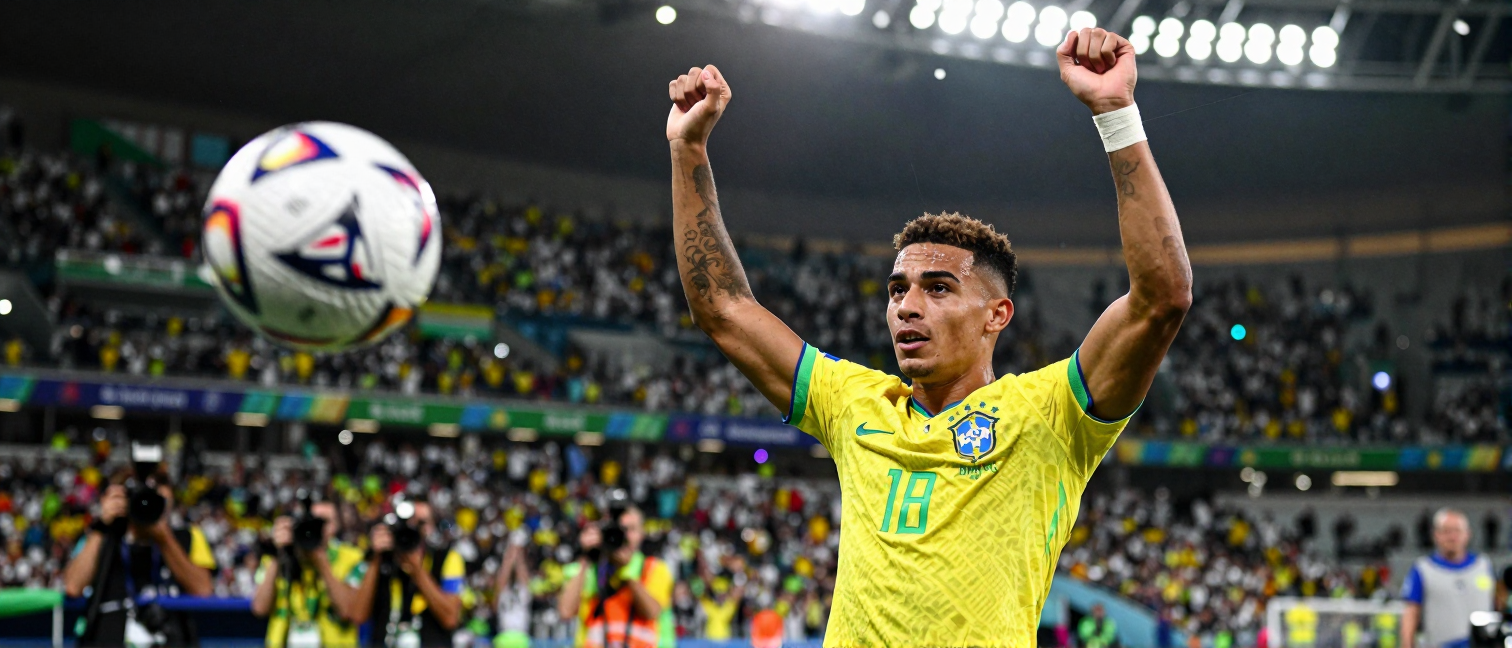
Gabriel Martinelli delivered Brazil’s extra‑time winner on 1 July 2026, sealing a 2‑1 comeback over Japan in the World Cup round‑of‑32 in Houston and sending the South Americans into the last‑16.
What happened in Houston?
Brazil entered the match as heavy favourites, yet Japan pressed hard and led 1‑0 after 27 minutes through Kaishu Sano. The Brazilian side looked disjointed, with Vinícius Júnior and Neymar struggling to find rhythm. Bruno Guimarães restored parity at the 56‑minute mark, heading in a cross from Gabriel Magalhães. The game seemed destined for extra time until Martinelli, playing an unfamiliar left‑central midfield role, collected a pass from Guimarães and slotted home in the 96th minute.
How did Martinelli’s role change affect the game?
Usually a right‑winger for Arsenal, Martinelli was deployed deeper on the left side of midfield, a position he has never occupied in the Premier League. This tactical shift gave him more space to read the game and arrive late in the box. His movement confused the Japanese defense, allowing him to find the ball just outside the penalty area before striking it into the far corner of Zion Suzuki’s net. The switch also freed up Magalhães to deliver the earlier cross that set up Casemiro’s equaliser.
Why is the goal significant for Martinelli’s career?
The striker has scored only one Premier League goal last season, and his name rarely headlines Brazil’s attack, which is dominated by Vinícius Júnior, Neymar and the teenage prodigy Endrick. By netting the winner in a World Cup knockout match, Martinelli proved he can produce decisive moments on the biggest stage. The goal not only kept Brazil’s campaign alive but also raised his profile among Arsenal fans and the national team’s coaching staff, who may now consider him for a more regular attacking role.
What does this mean for Brazil’s next round?
Coach Carlo Ancelotti praised the team’s resilience, noting that “suffering is part of the game.” Brazil will face either Norway or Ivory Coast in the round‑of‑16, and the defensive lapses that allowed Japan to dominate the first half could be costly. Martinelli’s adaptability and clutch finishing provide a new option for Ancelotti, who may rotate his front line to address the lack of cohesion displayed against Japan.
How did Japan’s performance influence the match?
Japan’s organized play made Brazil appear “average,” as the article observed. Their early goal and disciplined defending forced Brazil into a frantic search for answers. The Samurai Blue’s technical quality in the first half highlighted the gap between the two sides, but Brazil’s superior depth and physicality eventually tipped the balance. Japan’s exit after a brief lead underscores the fine margins in knockout football.
What are the broader implications for Martinelli’s club future?
Arsenal manager Mikel Arteta has watched Martinelli’s World Cup heroics closely. The forward’s willingness to adapt tactically and deliver under pressure could earn him more minutes in the Premier League, especially as Arteta seeks versatile attackers. Magalhães’s crossing display also reminded fans of his defensive contributions, but Martinelli’s goal will dominate headlines as the story of an unlikely saviour.
What’s next for Brazil?
Brazil must tighten its defensive shape and avoid internal fouls that plagued the Japan game. Ancelotti’s squad will likely retain the same core while tweaking midfield roles to prevent chaos. Martinelli’s extra‑time strike has given the team momentum, but the next opponent will test whether Brazil can translate that spark into a smoother performance.
The match will be remembered as the night a young Arsenal forward stepped out of the shadows to write his own World Cup chapter.